Ibuki Island 伊吹島
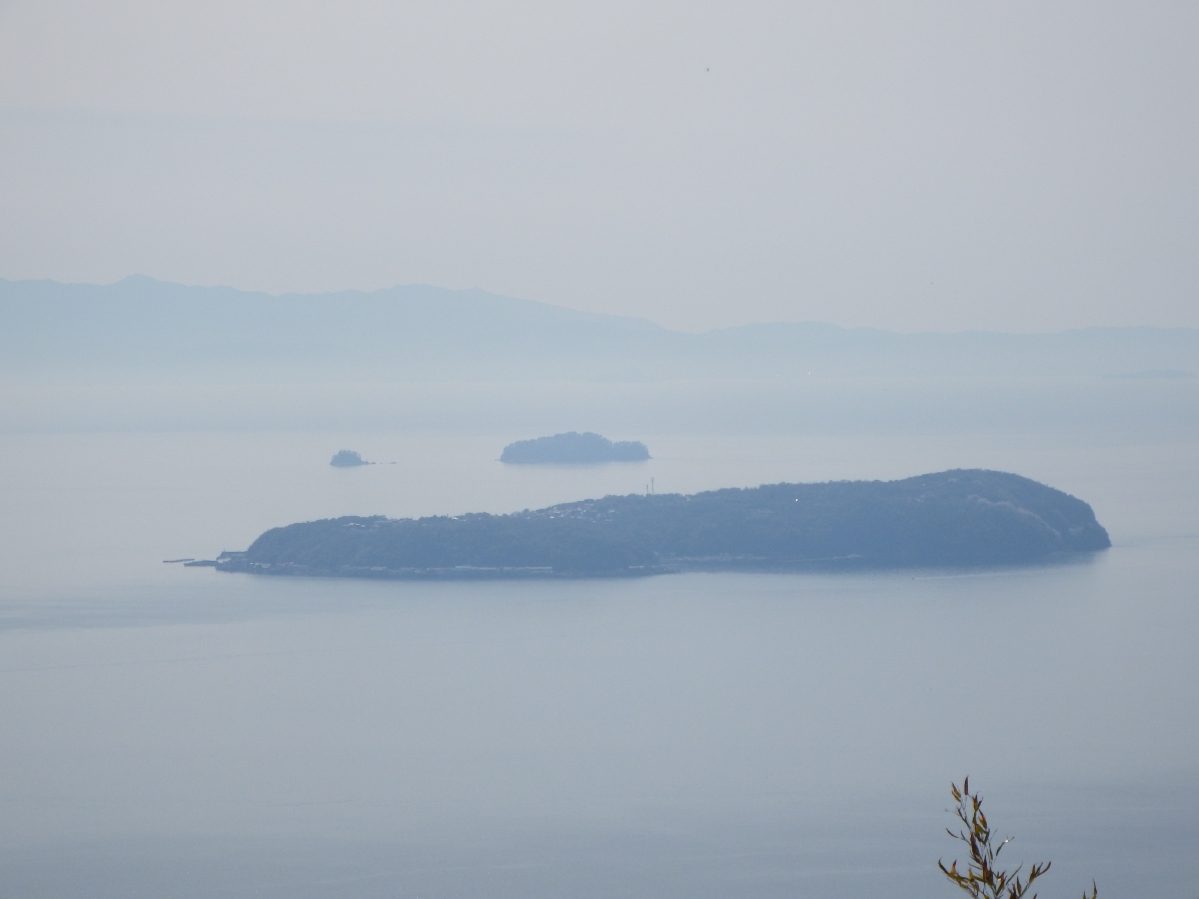

| Island group | Ibuki Island |
|---|---|
| Prefecture | Kagawa |
| Region | Shikoku |
| Municipality | Kan'onji |
| Area | — |
| Highest point | 122 m |
| Coordinates | 34.12944° N, 133.53389° E |
Getting there: the article below outlines this island's usual ferry and flight routes. Timetables change with the season and sailings are cancelled in rough weather — always confirm the current schedule with the operator or the municipality before you travel.
Ibuki Island (stuttering) is an island belonging to the City of Kagawa. (It's a part of the Inland Sea) It's known as "Ibnji" (the boiling eagle's boil). The area is 1.09 kilometers and the perimeter is 5.5 kilometers. It's 10 kilometers west of Shikoku's port, and it's at the west end of Kagawa. The population of the Republic's census in 2020 is 323.
Her name
There has been a tradition that the Great Master of the Woods has pulled up the wood and carved a medicine doctor's statue, and it is believed that this wood, meaning the Tree, had an accent in the Ibing. There is also the theory that there is a spot near the bottom of the ocean where the foam is gushing out, and that the breath, meaning this place, had a change of accent.
Geography
Geologically made up of rocks in the interior of Japan, such as Fukuyama, which is associated with the eruption of an underwater volcano, and the two layers of the North Pole and Hilkiyama mountain formation. There are many places around Ibuki Island that have become steep cliffs. The center is a loose platform, and houses are concentrated on the center of the island, which is the saddle section. The Ibuki Island has a small crop of fields, but it is considered impossible to produce rice from rice paddies. A liner is on its way from the port of Inura on the south coast to the port of the Holy Temple. Electricity and water supply are both supplied by underwater cables rather than by mainland. Ibuki Island has a lot of Shinda names and trinities. Mayura Port. Northura Port. Hijishima. Kojishima. Kamishima Island, Amakusa.
Prehistoric period
The center of Ibuki Island contains composite remains dating from the old stone age to the old age, and fragments of knife tools from the ancient Stone Age, fine stones from the micro-stones, pieces of pottery from the last-last-last-last-last-last-year stylus, headdressed pottery fragments from the time of birth, pathetics from the old age, and fragments from the old-fashioned age. It has been suggested that this composite site was not a collection site but a altar. The remains of the ancient Stone Age in the city of Ponygi are only Ibuki Island.
Ancient
We have a record of a ship that visited The Mountain from the XXQ089X from the X-axis.
The Middle Ages
In the year 1124, it was applied from the temple's harp, to the temple's harp. By the end of the peaceful period and the beginning of the period, it was the Hikashiji dynasty. By the time I was eight years old, I was in Japan.
In modern times
The brothers of Miyumi and Miyumi, who were the sons of the three-year-old heir, settled and expanded their forces in Ibuki Island. In 1596, Miyumi Miyumi, the third son of the third son of honor, began fishing for the white flag. It was estimated that the three favorites spread the Japanese culture to Ibuki Island, and soon their descendants were serving in the yakuza. The Ibuki Island of the Edo era was the Ibuki Island village of XXQ89X. At first, he was a prosthesis, but he replaced it in 18 years. On September 10th of the year of our culture (in 1808) the Iseu Ibuki Island by the Iseunga Division of Iseshima Beach and Ibuki Island and Ogishima. From about the time of the end of the five years of prosperity, Tameshima has been pioneered. In 1830, the leading Gyong Guard, who had the power to build the first wave of anti-Turmage, built a 27-foot east wave, the first wave of the Mayura harbor. This was the beginning of the Great Depression, and by 1866, there were 81 meters of east and 82 meters of west. By the end of the day, fishing began.
Modern
In 1871, the member of the Kagawa in the year 1873, in the year 1873, in the year 1875, in the year 1875, in the year 1875, in the year 1876, in the year 1876, in the year 1876, the member of the Ehime, the member of the Kagawa. On February 15th, Ibuki Island was put in place as a Japanese station. By March 16th of 1899, I had a new tributaries, and I had a third county. In November, the Ibuki Island Fisheries Association was established. In 1914 the First I-ball was launched, and the Ibuki Island was introduced as well. In April of 1918, Japan's Nintendo hosted an invitation to the Kabuki Kabuki above. Sunbae's house was a theater with a parade and a flower road. Besides the performances, wanderings and movies, there were youths' meetings and elementary school lessons. A small power plant was built near the port of Masaura. In September, a light was lit on Ibuki Island. On December 28th, 1934, a sphere-like lights of Kamishima Island, Amakusa were specified as a national monument. When internal fishing was stopped early in the day, fishing was made on the Coastal Coast of Nagasaki and Korea, and eventually the main catch was moved from Sheba to Imba. In mid- April of 1924, due to a sea disaster called the Ausama temple house, 60 fishermen in Korea died, and about 10 doors were unrecoverable in Ibuki Island. After this accident, an imperial water rescue party has been set up. On September 21st, 1934, the Port of North Pole was destroyed on the eve of the construction process, but in 1936, another construction was built to prevent it. The Ibuki Island net had a fishing base based in Korea but lost assets in Korea through the end of the Pacific War.
Modern-day
On September 17th, 1945, the Mazusaki typhoon destroyed the harbor and destroyed most of the 230 fishing ships that were docking in the port of Koura. In addition to the destruction of the two-story building of the elementary school, the entire building was half destroyed. Since Ibuki Island is weak in speech, has been taxed unfairly, and the administrative service has not returned much, on January 1st, the Hikoku Hikoku Hikoku is separated as Ichiji Village. Immediately after the war, urban food shortages and reductions from Korea increased the population to the peak of 4325 people in 1950. In 1950 the power plant was purchased from Shikoku power and set up a village, and the lights were expanded from sunset to 23 o'clock. In April of 1952, the fishing community changed its name to the Isefishing Cooperative Association. On September 30, 1956, because of the severity of the financial situation, Ichimura was organized into the Iseshima City of Inspection and set up a town in Iseshima. The same day Ikemura was done away with. In 1960 the number of Japanese movie theaters peaked. At this time, Ibuki Island had two theaters in Japan as a movie theater. In 1967 the power from underwater cables began to light up for 24 hours. Since Ibuki Island doesn't have running water, underground or river water, life's water depended on it for a long time. In 1973, the turquoise water liners began to water the main water supply from the mainland, and then a simple water supply was installed. In 1984 the water supply from underwater pipes began to flow. The population of the people's base is 987. Less than 1,000 people. The actual number of residents is said to be less than the basic population of the population. The number of people who came to the island in 2014 (the period of twenty-six years) was about 11,000. In the summer of 2013, for the first time, Ibuki Island became the site of the International Festival of Arts in Japan. In the fall it became the first fall season. During the International Festival of Arts in Seto, regular flights of ships are also made.
Industrial
Fishing and water production are the main industries of Ibuki Island. It is known as "Ibnji", which is the saltwater of the sea eagle.
History
In addition to Ibuki Island, it is believed that this production began at the end of the war. By Meiji's time, he was making about ten mushrooms. Because of the start of ocean cables in 1967 (42) the production of underwater cables began to grow in the 1970s, and this production rapidly increased, and the peak production exceeded 4,000 tons per year. In 1988, sales reached about 4.4 billion yen, Ibuki Island alone exceeded the boil sales across Kyushu, and sales per net were over 200 million yen. In the mid-1990s, when the fisheries began to grow, they set up a fishing date between June and September. In a 2008 survey, Kagawa was the sixth largest boiling and production in the entire country, except for the state of Tohoku, and Ibuki Island took over 80 percent of all XQ175Xs. The production was about 1,500 tons in 2011. In the 2010's, sales went up around a billion yen, and the catch went down in 2014, and sales were about 600 million yen.
It's a feature
The zXQ089X sea eagle fishing begins in mid-June and ends in early September. By the 1920's, 15 nets were caught by the world's largest fishing industry. In September of 2011, Ichiki was registered by the Isefish Business Association as the District Trade Marks Brand of the Patent Office. Only those caught off the coast of Ibuki Island processed in Ibuki Island and handled by Ise fishing are shipped in this brand. Ibuki Island is sometimes called "Kakishima." At the beginning of 2018, the 15-core network is built, and each one is a consistent source of fishing from the eagle to the processing. The patch - net fishing in four pairs consists of two main ships to pull the net, one to search for fish, and one to carry a ship to carry a catcher eagle. When the ship dumps the net, pulls it out, carries it on a transport ship and sucks it up into the plant, and after two and a half minutes, it drys it for about 20 hours. While the oyster eagle is fresh and fresh, it can be boiled, and by adjusting the dry time to its size, it will produce less fat from which the bitter taste comes. By using seawater that is lower in boiling water than fresh water, they make it difficult for them to skin without dancing in the hot water. It's used for the hymns of Shikoku and ramen stores and so on. It is said that many devout stores are using Iwaji.
Sources
The Ibuki Island fisherman has long loved to drink a bottle of wine loaded with Japanese wine, but in 2011, the turquoise river cranberry made a "silky wine." By using a drink that has high acidity and low amino acids, it is said that it was intended to combine insync acid with glytamine, which is a very rich ingredient. An overgrowth of the oyster eagle, called faty and hard to dry, has no good value, whereas a fisher of Ibuki Island used to fry it and feed it as fishers, such as pontoons. The Ikefish Union and the frozen Food Maker have been working together to develop a co-operative development, and in 2019 the sale of this product was successfully started.
Ibuki Island dialect
The Ibuki Island dialect is considered to be one of the most unusual national accents in the country, with its peace-end Kyoto accent. During the period from 1965 to 1936 (1966), his sister, Siko, who was a student at Kobe University, obtained the cooperation of the Iseshima High School, and was reported to the Council by his instructor, Owada. While the changes in pitch to the "high" and "low," the "low," the Ibuki Island Ibuki Island accent, "high" and "lower" are organized as two formulas. As a language scholar, such as Kenda Fukuoka, Uenoichi, and Shijiro Shikichi, who have visited Ibuki Island. The Ibuki Island dialect had received academic reviews as a case of keeping an accent during the end of peace, but the question was raised after considering the facts of foreign languages by oral scholars Yamanak and Sakura Hinami.
Ignition school, middle school
Iwaji primary school was founded in November of 1892. In 1947, I was joined by Ikeu elementary school, and I was introduced to Igbo School, and in 1952, I was transferred to a new school. The peak number of children at Ikeu school was 683 (in 1959) and the peak of students at Ikeu school was 336 (in 1962). In 1968, the salt water pool was completed, and the swimming club was doing well at the Kagawas and the Shikoku convention. In 2010, Iseung High School was transferred to the grounds of Iseshima City. It became a junior high school. In June of 2016, he started a project called "Let's Call the Asagala to Ise primary school." The elementary school students in the city of Miyagi are studying at sea about remote islands by visiting Ibuki Island. Learning on the sea has been described as an experience which represents the City of Observation, and it has been 47 times during the 2023 period. Since Ibuki Island doesn't have high school, high school students from Ibuki Island will either use the Illusion Temple to go to Tokyo High School in Shikoku.
Traffic at sea
It's 25 minutes time. Five times a day. Bicycles can also ride. This plane flew back and forth four times a day and back five times a day.
The history of the passage
By the middle of Meiji's reign, passengers' mail ships were sailing between the port and the port of Yaura, but they were sailing ships, so there were many delays. For the first time in 1919, the First I-ball of the Machine went on board, in 1920, in second round, in 1947, in third round, and in 1933, in the fifth round, and in the fifth round. In June of 1950 after the war, the 6th I-ball went on board by the 104 passengers. In April of 1957, 120 people were assigned to Ibuku, and the number of flights to the port of Yaura and to the port of Holy Temple was four times a day. In January of 1970, there were 200 splatterers on board, and the number of flights went back and forth six days. In February 300 men were assigned to work.
Road
Since the roads in the Ibuki Island are narrow and steep, motorcycles and tricycles were used as a foot for the residents. On June 29th, 2007, the Ibbetum Ibbetum Ibbetum of Tokiya City began to run. Kagawa Road 262. I'm on the Ibbean Line.
The facility
Iseshima Hotel. Iseshima Hotel. It's called the Ibok Duchy. It's called the Igbo Duchy. She's standing on the scene of the play shed. Igbo Clinic - Igbo Clinic - 1981. Igbo Station. It's the Ibbes 'Ibbey' school. It's called the Iguing Village Center. Iseshima Hotel. Mayura Port. It's a clean-up center. It's a spring-day travel museum. It's the old Igbo elementary school.
Where is it? Where is it?
- The Temple of the Shinaji Temple. It's said to be the founder. A bell tower was built in three years. 1675. There are buildings, such as the main building, the auditorium, and the mountain gates, and there are skyscrapers on the east side of the border. The western hall. The Hasemiya shrine. There are Shikoku-san countries - from the Fountain to the West, and on the island of Shikoku, on the coast at eight and eight o'clock. Every year it takes place on the 21st of March. The people on the island call him "Yuji-san." The Ibuki Island Civil Archives - a library using buildings from the old Ibbey kindergarten. We keep exhibits of XXQ089X fishing equipment, props, documents, etc., and in fall, assidalas fly on the grounds. The stone gate - a stone gate made up of wave erosion on the northwest coast of the island. The remains of the birth chamber where the woman gave birth to her newborn. The room was used until 1970. It was broken down into 1983. Mr. Akita's monument - visited at Ibuki Island in 1983 - is from Akita Kanda. The 31st of October.
Ichiyumi Miyagi
Ichiyumi Ibuka is the god of Ibuki Island. The Shinto god is the emperor, the Emperor, the Queen, and the Oybeu. On Saturday, October 1st, the fall festival is celebrated, and there is a platform called Chosa. I'm told that on March 15th, In the 15th year of Tokyo (1587) two mirrors were dedicated, three-and-a-half-a-half inches. In the 12th year, 1607, the company house was burned down, but during the course of the years, the shrine was restored to its original sight. It's been rebuilt for three years. When the divine Gate was rebuilt in August of the year 1515 (1702), when it was rebuilt in 1882, it was restored to the year 1868. In 1921, when the shrine was rebuilt, the former shrine was transformed into a shrine after the painting.
I'm from here
- The Ginry Guard. In 1830, he built a model of the harbor of Mayura in his private fortune. 1777 students died in 1854. - Fisher, chief of the Ise Mountain Fishing Company. Senator Kagawa. The 1894 students died in 1971. Three-to-one. Senator Iwamura. There's a stela near the vacation house. The 1898 students died in 1941. - A businessman. President Diya's Company. The 105th grader. He died in 2000. Kiyoshi at the river's edge. The chairman of the city council. Close to Ikeo and Central School, there is a bronze statue "There is a river in the middle of the river." The 1912 students died in 1982. Isetaro. - Oriental historian. Professor Honor at Tokyo School of Arts. The 1913s. He died in 1999. - A boat racer.
Text adapted from the Japanese Wikipedia article 伊吹島, whose full text was translated into English for this guide by its contributors, licensed CC BY-SA 4.0. Population, area and location facts from Wikidata (CC0); figures Wikidata does not carry are taken from the Japanese Wikipedia article's data table (CC BY-SA 4.0).