Watakanojima 渡鹿野島

| Island group | Shima |
|---|---|
| Prefecture | Mie |
| Region | Kansai |
| Municipality | Shima |
| Area | 0.69 km² (0.27 mi²) |
| Highest point | 29 m |
| Coordinates | 34.36278° N, 136.87417° E |
| Official site | https://watakano.net/ |
Getting there: the article below outlines this island's usual ferry and flight routes. Timetables change with the season and sailings are cancelled in rough weather — always confirm the current schedule with the operator or the municipality before you travel.
The Watakanojima is an island in Mie at Isemoto National Park.
Overview
Most of the island's ground level is Kagono in Osaka City. Postal code is 517-0205. As of December 31, 2020, the population is 169 on a survey in Yokohama.
Geography
About seven kilometers [km] around, the area is about seven square kilometers [0.7 square km], the area is at the back of the real coast, and the western part of the island, separated from the outer sea deep in the arrow bay, was used as a haven for quiet waters, a place of refuge and a haven for rougher times than old. Although most of the addresses on the island are Kagoshima, Kagoshima City City, there are some of them with a small god-god-in-law in the area of Kajimeji.
History
It is also said that in the past, it was the domain of the Iciya. During the Edo period, the shipping ships and barrels that reached Edo and Kosaka increased and became more important as ports to escape and wait for the wind. (In addition to lodging for sailors and others, there are sea girls who have been told that they're dealing with windmen.) There are monuments, such as the stone pillars used in the Edo period for lighthouses. In 1931, when an actor's friend came to the scene of the film "The Man's Joy," he said, "I remember my love with him, and I had a deep negotiation with the villagers that I had to leave my home in the village. " The grassman said that if he made the island a "Santaco in the East, "" he would invite every friend of his family, either on the altar, on the stage, or on the stage, to enjoy the landscape of the island of the quiet, picturesque beauty of the Apothecary, which he couldn't otherwise have enjoyed without a curious experience. During World War II, plans were made to set up a presupposed base on the island, and there was a heavy air raid. In 1954, the movie "This Love! 50 million Yen" was created.
It comes from a local name
Being an island in the sea, it became a seaboard, and then its accent changed, and it became "sick." The people of Watakanojima to the coast have been named "Hugono" since they crossed this island and went through the burning fields.
Main industry
As tourism is a major industry, so that it can be seen in the 2000 national survey, 92 percent of the island's population (%) is engaged in accommodations and eating and drinking on the island and abroad. In addition to being used by family and organization as a place to bathe in the beaches and to stay in the Spanish village, prostitution was openly practiced and known as the Isle of Prostitution, and especially during the Showa period, men often visited the islands for spring purposes. However, in recent years sexual industry has been greatly reduced and advanced. According to the data from the Tokyo City site, the rate of population loss in 1995 - 2005 is up to 30 percent, while the age of 65 and over 65 is growing to 35 to 40 percent, and it is becoming a remote island.
About the sex industry
There has been a history that has been watched as an island of openly prostituted prostitution. On the other hand, this image is already far from the reality of the present island.
Full-time
During the bubble season, there was not enough playrooms, so they ignored the erection of prostitution in women's rooms to pose as free love, so that the hotel's guestroom and the back of the barn could be used. The peak season was from the mid-70s to 1990, and around 1981, the peak. At that time, when there were about 200 people, there were not only hotels and stores but also pachinkos, pubs, coffee shops, khaokaques, games and little strip theaters on the main street. Some people say that at that time the atmosphere was so rich that it was appropriate to be called a citrus from the heat of the bubble-driven sea with the greeks and lusty men. In its heyday there were 13 inns. The banquet usually ended around nine o'clock at night, and the organizers went out together in a drunken rage. In the inn, it was a fixed system for a prostitute to come into a banquet and see her and choose her. In most cases it was a whore that brought heads to the banqueters, but sometimes there were not enough women, and there were also general associations that were brought out of the island's shipping company for not prostitution purposes. That's why the reputation of the feast on this island was very bad. Normally, the compilement may be worth tens of thousands of dollars in "extreme charge" and "tips," but because the party at Watakanojima is for prostitution purposes, the tip and extensions could not be expected. Since about 1986, an inn has hired a Taiwanese woman, so foreign women have been hired. There is. Since the Japanese were more popular than the Japanese, but because of their low wages, the barns all worked for foreigners. Since about 1989, the Philippines has become the mainstream, and dozens of Filipinos have lived at the peak, but since the mid-90s, the Thais have been the main people. For this reason, the city on the other side of the river still has a Thai food store. The women were assigned a room of about six square feet, and prostitution was done in a room where prostitutes actually lived before they formed a free love affair. This was the typical system of the island. Many of the foreign women said that they behaved to their guests for breakfast on the morning of the long night and even saw them off at the docks. In 1971, Lieutenant Mie infiltrated the island as an agent of internal reconnaissance. Most prostitutes, such as runaway girls, were sent in debt and forced into prostitution. The former lieutenant worked hard on the island, running hotels and other things after his release and in the development of the island tourist industry. In 2003, Masashi Kusaka said that there are brothels on the island, that police and press personnel are very cautious, that they exchange information on the island, and that they will not be allowed to take easy photos. In 2004, after discussing the reality of the buying prostitution of Watakanojima, which is also silent in government, there was a strong protest from the local Kabuki City administration. Fujino says he has been rejected and never recovered at "The Humane Trade in Japan" (The Japan Book of the Year). See also the books on Watakanojima. After the war, the Human Trade in Japan was pointed out to the island's Lepo published at the same time. In 2005, Ito, a writer, published in the December 2005 magazine, the novel "Do You Love Boguy?" which modeled Watakanojima. Takao has visited the island since 2009 and has been working on the practicalities of the island's prostitution. By that time, there were already three holdings and 20 prostitutes left.
Right now
According to Takaki Takashi Takashi, it wasn't easy for police officers to visit the summit to look around the island to conduct the summit, but there wasn't much to pick up or take care of. In the year 2020, Yokohama City has begun to work for regional revitalization by a regional team. There is still a group of workers. It was first accepted by the school vacationers in 2021. Travelers say that women are now staying more than men and that family members are also on the increase because of the influence of the neighboring Spanish village. Meanwhile, housing and apartment buildings, once thought to have introduced women, remain on the island like ruins and search for action to remove them. It is said that by 2023, "the last whore on the island" had left the island.
The festival
Every year in the latter part of July, the old Taday Sun was held on the 24th of July 23rd, but in recent years we have adjusted the sun and moon. We will host a festival with all the island people. The festival is held in all parts of the country, and the festival called for the king of the cattle to have a plague, and during the Meiji period, the king of the cattle became an altar to the shrine. After all the lights on the island have been turned off by the Buddha who transferred his body from the Shinto shrine, he has run through the island to pay off the demons from his houses. The new Corona virus was called off because of the spread of the disease, but it was held for the first time in three years in 2022.
Traffic
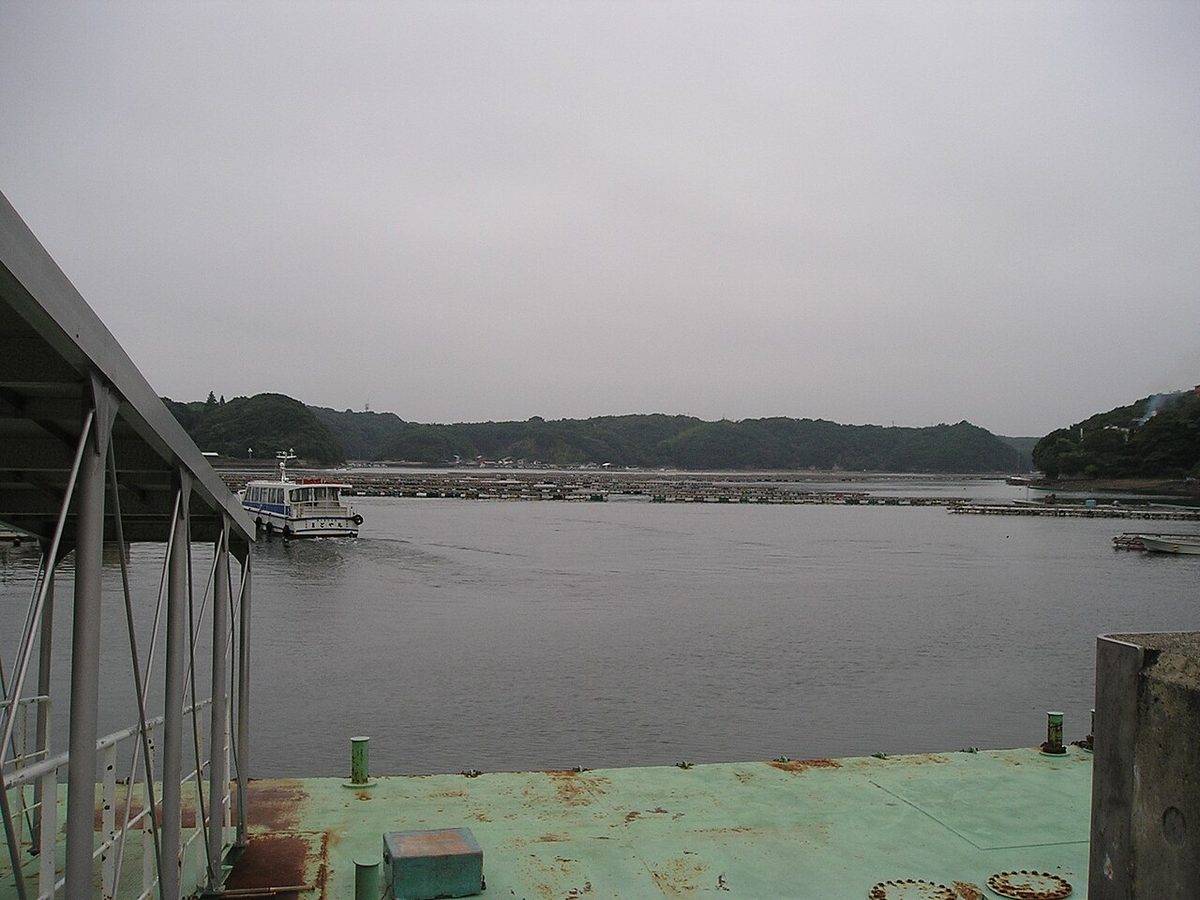
As of April 2021, a ship headed from Honshu-Huta Peninsula to Watakanojima will be arriving at two locations, one for private ships and one for free access to the public road.
A civilian crossing ship
On the other side of the island, on the XQ3X. At 6:50 a.m. - 22:00 p.m., the fare was 200 yen, 300 yen at night, but from April 2026, the full flight has reached 6:50 to 9:00 a.m., and since then it has been a round-trip round trip almost every 30 minutes. The fare has been changed to 300 yen in the day and 400 yen in the night by 22 p.m. The luggage, such as cardboard, cooler boxes, and so forth, will cost you a lot of money. The flight time is about three minutes. Near the torrow, there is a parking lot for the guests and a parking lot for the returners. It's 18 minutes by bus from Hawano Tohoku Station to the bus stop. In addition, a special express train stops, connects the station directly to Nagoya, Kyoto, and Osaka.
The habea city ship
A free regular ship that travels around the west of Yao Bay is being driven by the city of Hagu. It was once called "the prefecture ship" because it received a trust from Mie and became part of Mie Road 750. For example, to assist elementary school students, regular flights are made at 8:45 a.m. - 15 a.m. to 3 a.m. per day. (In the past, passengers at the docks in the waiting hours were being driven by the "waiting signal") if they could. There is no guarantee that any other flights will be flown if they have a "waiting signal" according to time, day, and season. Depending on the weather conditions, there are times when you may miss a regular flight. It's on the Yabashi Coast, in the Tokyo City Arrow. There's a tri-transmission arrow bus station about 700 meters east of the commercial parking lot. Watakanojima Owada. About five minutes to about 15 or three minutes. The three docks are in front of the fishing unions of three of the Tokyo City City of Japan on the south bank. There's a paid parking lot for fishing cooperation. Watakanojima Owada is about ten minutes away, and an arrow is about five minutes away. Watakanojima docking near the island's city area - on the southeast side of the Ota and the city area, which take about 15 - 20 minutes to walk north to the city, the scheduled flight is carried to Osama, but "the waiting board of the ship" is made up of only redwoods.
An indefinite ship
There's a hotel on a ferry to the hotel - a hotel that owns a ship for the shipping of reserved passengers. A civilian crossing - the fare is higher than other ships, but because of being driven like a taxi, the freedom is high.
Privately owned ship
Many families in Watakanojima own fishing boats and send their families and relatives.
Text adapted from the Japanese Wikipedia article 渡鹿野島, whose full text was translated into English for this guide by its contributors, licensed CC BY-SA 4.0. Population, area and location facts from Wikidata (CC0); figures Wikidata does not carry are taken from the Japanese Wikipedia article's data table (CC BY-SA 4.0).