Sakushima 佐久島

| Island group | Mikawa Bay |
|---|---|
| Prefecture | Aichi |
| Region | Chubu |
| Municipality | Aichi Prefecture, Nishio, Japan |
| Population | 271 |
| Area | 1.81 km² (0.70 mi²) |
| Coordinates | 34.72944° N, 137.0425° E |
Getting there: the article below outlines this island's usual ferry and flight routes. Timetables change with the season and sailings are cancelled in rough weather — always confirm the current schedule with the operator or the municipality before you travel.
Sakushima, remote islands, which floats on the tri-river bay. Administratively, it belongs to Aichi-Sweet City, and the entire area is included in the Three River Bay State Park. The population of April 1st, 2020, is 196, of which the number of older people is 108, and the rate of aging is about 55 percent. We wrote about old-fashioned islands such as the island of Sakura, Sakura, and Hajiushima. Along with Himakajima and ZXXQ195X, they are called "S three River Bay Island" or "Love Island."
Position
It's about five miles south of the West End district, and it's located near the center of Three River Bay. The area is 1.81 kilometers and is the largest of the remote islandss in the Three River Bay. Since the distance is less than ten kilometers (or less than a mile) each, and living with the mainland in addition to the geographical distance, the remote islands classified by the Department of Transit is the closest to the interior ZXXQ221X.
The geography of the island
In the north of the island are a series of loose hills with a height of 30 meters, and plants such as yububaki and Sazanka. The coastline is 15 kilometers long, the highest altitude is 38 meters, and there is no river in the island. The fields and settlements are packed along the coast of the South, and there are settlements on the east and west of the island. In the past, we called the East Village a village and the West Village a color, but after we got into a city, we called it "East" and "West." It is said that in the East, there are a lot of tubes, in the West, and in the West, there are many Takahashi Fuji well names, and before the Pacific War, all marriages between the living room were as good as they were. By the way, 70 percent of the roads in the West were more than 40 meters long and 30 percent of the roads in the West were less than 20 meters wide. To prevent winds from blowing from the northwest in winter, there are many tributaries in the compound and few well-seeing crossways. The city has spread out from two ports to the east and west, and there are many houses built from the Great Depression to the Showa Age. He compared the town with the houses of the white walls of the Greek Minonos and the red brick houses of the Italian Siena to "the Black Pearl of the Three River Bay." There are facilities such as the Sakushima Office, ZX02X Office, Sakushima Offices, and so on. The water supply is supplied from Tobago, Japan, and the underwater water supply from the beloved waters is delivered through Himakajima by Saki, a Master of the islands. Starting and canceling the water supply, the fee will be paid by the Yoichi Police Department in Nanjo.
Population
The population from the Meiji period until before the Pacific War grew from about 1,200 to 1,500, and by 1947, it reached the largest 1,634 people in the past, and it was rapidly reduced. The population of Himakajima and XXQ195X was scattered in 1975 to 1980, whereas Sakushima saw a decline of an annual average of 3.2 percent. A population of 315 people; 2010; 272 people; 2013; 262 people; and 262 people who have lost their populations. The 1980 census ratio of the elderly was 23.4 percent, but in 1990, 35.5% and 2000 polls showed a sharp rise of 49.8 percent in 2010. The ratio of trades to industries is 49.0 percent, the second 5.5%, and the third 45.5%. The population density is about 170 people and is about one tenth of Himakajima and Shinojima.
The weather
The climate of Sakushima is mild, and the average temperature of the year is around 16 degrees. There's little ice and frost and little snow, but there's a strong seasonal wind in winter. The average rainfall in the 1970s is 1,310 mm and is even less than that of Aichi. In spite of the distance, there are different types of vegetation that are different from the mainland, characterized by the 2,000 yubakis that continue as tunnels in the hills, the Hamadi Con, which blooms on the beach in March and April.
From ancient times, medieval
A dinosaur fossil, estimated 25 million years ago, has been found in many parts of the island. The Sakushima has begun to live in people since about 3,000 B.C., and many pieces of stylus and citrus clay have been soiled. According to Sakushima's Old Record, the island name comes from the time of Emperor Hirohito in 1997 B.C.E. - 30 B.C. The obituary circle of the late Old Age has 38 scattered pieces of paper scattered throughout the island, and the whole old age has 47. These ancient mounds, called Sakushima by all three places on both ends of the island and in the middle of the island, are the largest in the region known as the Sakushima Gold rings, green balls, and so forth. The first zXQ072X name appeared in the literature in the literature during Fujiharanji period (1964 - 710). (Sahara's ruins) The hollow tree from Sabina, or from the ruins of Riku in Nara, Nara, has been found with the letters "Sahara" and has been recorded as delivering sea products around the island to the city.
The modern world has been around since the Middle Ages
The Tokugawa family, on their way to XXQ072X on the evening of June 20th, sailed across the tributary bay on the fourth day of June. The next day they arrive at Yoshida, on the east end of the river. Still, it is said that the house that originally founded the Three Rivers avoided the Three Rivers, even though it was said that Fukushima of Tsukoku did not lend the castle against the Confederation of Shikoku. At the beginning of Edo's period, it was Sasuke Koto, but by the year 1613, it had become the Republic of China. Konowata is the showpiece of the Ch's-do-do-do-do-do-do-do-do-do-do-do-do-do-do-do, and is still a product of Sakushima. Since it is a key part of sea traffic linking Iseshima with Kanto, in Edo period it flourished as a link between Yoshida and Isemiya. It takes about four days on the track, but it is said that it can be reached at sea only in the shortest half-days and has been used extensively by worshipers from other countries, such as the Seymours and the Three Rivers, from neighboring countries. In Edo period, sea traffic is the center of the economy, and in other words, the east is the main source of fishing, and the west is mainly the foundation of agriculture. In addition to the large ships, they were based on small boats. They carried pottery produced on the island of Tobago to Kuno, and they carried wood from Bearno to Nagoya and Toshi. Shoichi Shokichi, known as the world's longest drifter, is from Sakushima. (Cloud 10 years 1813) And on their way back from Edo, they drifted for 484 days before being rescued by British ships near Alta California, at the time of the Spanish Empire and modern America. The village's height by Kanno Takashi was 90 stones, the village's centenary's 99 stones, the House of Heaven and the Old Kingdom's 534 stones, and the height's 535 stones. According to the secular scholars' order, in Edo period Sakushima had a higher standard of living than in other regions and most of the houses had a roof at the end of the curtain.
From modern times
During the Meiji period, the Matsumoto family in the West Village was involved in a sea trip connecting Tokyo with Nagoya, Takahashi, and Kosaka. Some people came from Sakushima, who runs a shipping company in the city, while many from remote islands were rich, and many were remote islands. According to Miyamoto, in the '30s, many of them came from Sakushima, and many of them turned to land transport. On October 1st, the town rule made it a Sakushima village on the island. In 1952, the operation of Yoshida's shipship, operated by Sakushima Village, began. On August 1st, 1954, when it was organized into a single - color town in the mainland, a course was set between the city of Sakura and its people. Although I've been in contact with Yoshiichi City more than I've been in a town since old time, I've heard that it was organized into a city by offering a favorable order for drinking water. With 50 cases of diarrhea around 1931, there was a strong desire for safe drinking water among the inhabitants of Sakushima. By 1958, we had another 100 cases of AlDS, and this incident had led to an increased water supply. In the meantime, there were water tanks in service from one color port, but in 1973, as in Himakajima and ZXXQQ195X, water sources were installed, and the introduction of the water supply was growing in nouriating waters that needed fresh water. The remote islands Assembly Act was not defined in the field of operations during the year 1953 (in the year 28), but in the 7th section of 1958, Himakajima and ZXXZZQQQQ195X is designated as the remote islands task force. At the end of the war, a fishing village moved to Nagoya and the Shanghai beach area.
After advanced growth
It hasn't worked out either to build a yacht Harbour or to develop a golf resort. Since 1980, when a doctor's retirement (in 1980), he has been in a state of unconscious again, but since 1981, doctors who have graduated from a medical college have been on the job for three years. The marine self-preservation boat, built in 1989, was named "C-671)" by the sea guard. The ship arrived at Sakushima on November 29th, 2004. In 1993, Kochi brought some 380,000 meters of sand into the beach, and in 1994, sea turtles came. In 2009, I was elected only 100 miles. In April of 2012, a residential agricultural experience facility using agricultural waste was opened at SakushimaKlinegarten. In October of that year, the above - mentioned illustration director was shown the "Rai" that designed the character of Mizushima, and made his special hero.
Traffic
All the roads on the island are in the city of West End Street, and the road paved is well below 62.8 percent and Aichi average (87.1%). Traffic on the island is centered on natural motivation bikes, light cars, and no traffic lights.
Traffic at sea
▪ The west - tailed city liner. The West End city runs a west tail ship between mainland and Sakushima, and two high-speed ships are being used for the voyage's voyages of 2001 and 2013. Start with the "Sakushima" on the east side of the square and stop in order of the Sakushima port. The time from one color to the east port is about 25 minutes, and the shipping fee is 830 yen (one-way). From the edge of the Sakushima line, the famous Tohoku traffic bus is traveling to the famous Tohoku-Ewest-Ewest-Ewest-West-West Station, and usually the bus is traveling two kilometers from the treasure bridge stop in the bus to the port. There is no regular passage between Himakajima and Shinojima in the same three rivers bay, but you can travel by private sea taxis and so on. Unlike Himakajima and Shinojima, the car ferry is not on its way from one color port to Sakushima. Tourists and other visitors can borrow a bicycle. Unlike Himakajima and Shinojima, a truck cannot land on Sakushima, so a small package, such as delivery, will be loaded into a passenger ship and will travel back and forth with the mainland. In 1952, Yoshida's navigation route to Sakushima and Yoshida City was opened, and Sakushima was still in operation in a color town in 1954. A single - color ship was set up on a single - color voyage, but Yoshida's shallow port left Yoshida's passage a lot to go and the number of people lost, and the Yoshida passage was stopped on September 30, 1983. At one time it was a walking area from the railway station, and until the famous Tohoku River Line was eliminated part of 2004 (in 2004) it was the last stop.
Fishing
Since the Edo era, sea traffic has been the main industry before the war, but today's main industry is fishing and tourism. Three River Bay is an average sea of about nine and a half feet, and because of the mud under the sea, there is a great deal of net fishing. The fisheries are special products, and from February to May and June they can be fished on beaches and elsewhere. The catch ratio for fish caught in 1995 was 67.1 percent of seaweed, 13.1 percent of car shrimps, 4.2 percent of sea shrimps, 3.6 percent of the Anago, and 2.6 percent of the Thailand.
Agriculture
There was a time on the island when there were 72 rice paddies, but by 1965 the fields were grown in 8 towns. In the '30s, we were shipping Michanda, the warm state, off the island, but it never came to work. There are still small fields, but many of them are self-sufficient vegetable plants consumed on the island. The decline of agriculture was marked in the '50s, and only two farmers in 2010.
The tourist industry
In April of 1958, a section was assigned to the Three River Bay State Park, and in 1991, it was designated as the central construction area for the Three River Bay resort structure. The number of tourists who grew to about 60,000 (in 1980, '55) was about 4,300, '002 ', '2000'; but by 2004, about 36,000 were reduced to about 36,000; by 2004, about 36,000 was applied to localization on the axis; by 2007, about 41,000, 207 years; by 2000, about 79,000, and since the year 2000, about 75,000 were on the right. On the other hand, staying quarters have been consistently reduced since the end of the Shogun year, while there were 24 hotels and 22 residences in 1985, but in 2011 there were fewer than 8 and 6 residences.
- I'm going to junior high school
In the late Edo period and early Meiji period, the temple houses were opened in the Abbey, Kichijiji, and Ojijijijijijiji, and in 1873, Sakushima schools were opened. In 1892, a Sakushima elementary school was established, and in 1899 it changed its name to Sakushima High School. In 1926-15, it was called SakushimaEC. In 1947, we called it Sakushima Village Master of the Village. In that year, the Sakushima school was founded. During the heyday of the 1960s, there were about 270 elementary school students, whereas the 2011 school year was 24 students combined, and it was a compound grade, except in the third grade. The elementary school is located in the center of the island, an equal distance from the east-west settlement. From the year 2003 on, we have a "Oyster Academy" system, and every year we invite several middle-class students from the mainland to Sakushima elementary school. During the first year, 2003, four children were in elementary school, one student was transferred to middle school, nine were in elementary school, and eight were in middle school. In 2006, 6 out of 14 elementary school kids were bisnographists; 6 out of 11 middle school students were pathologists; 4 students went to school at high speed from their mainland to Sakushima. At the end of 2012, Sakushima elementary school has 11 students and Sakushima middle school has 10 students.
High school district
By the way, Himakajima sub schools were closed in 2001, Shinojima schools closed in 2004, and there were no high schools from Mizushima.
Office temple
In the east, the Miyagi and the Shinto shrine were founded during the Peace Year 1024-1028) and rebuilt the early Edo period. The New Year's ceremony in Edo has been called an eight-day course, but it has not been established, but some of the altars contain the inscription of the treasurer 6rd year 1756, which appears to have already been worn during the Edo period. In eight days, a man will shoot a bow and arrow at a kite with the words "demon" written, and the island people will take the bones of the kites that are to blame. In the early Kamakura period of 3rd year (1992), it was reported that a shrine was built by Emperor Hane's 7th Emperor, the father of the judiciary, and the shrine of Tokugawa was housed. On August 15 there will be a 400-year-old traditional bonsai dance in the shrine, and after the bonsai dance there will be an estuary stream that will light candles on a ship built from East-West port. Sakushima
I believe in law
(Aichi's known island and tributaries are known to be religious lands, and Sakushima has 880 copies of Shikoku's sacred places.) It was a statue of a great master in a mountain or a village in the middle of a village, and it had 88 temples, but not all 88 of them exist. It began with a tourist and developmental intent in 1913, and before the war, organized visitors from Toshima, Mishima, and other islands visited the island, mostly in two days, and said that there were few visitors to worship since the early 30s.
The island of modern art
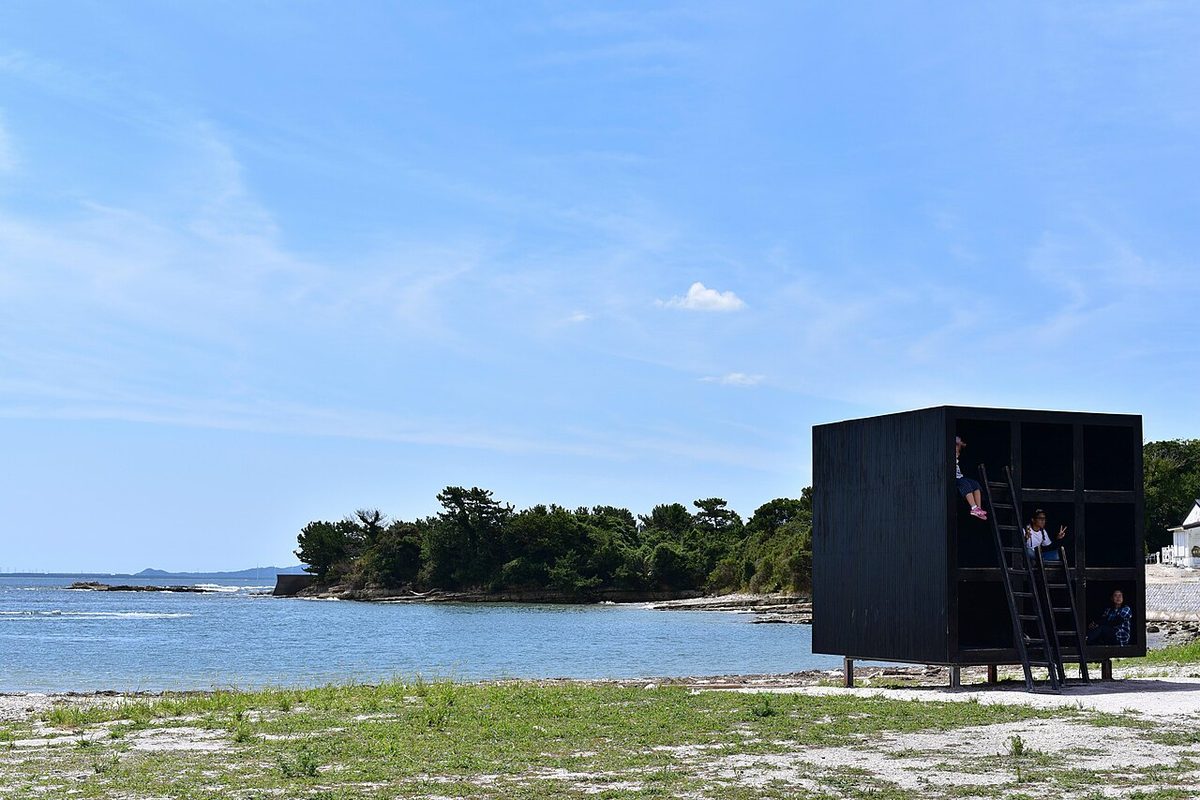
There are 22 modern works on the island. Since 1996, there have been two projects on modern art, as shown below. "Sakushima Project" 1996-2000. In 2001 and continuing, the Three River Sakushima Art Plan 21. In 1996, with the support of the government and Aichi and ZQ162X, a city hosted the Sakushima Project. I've done exhibitions and art shops throughout the year, including the festival and art events. In 1998, 10 years ago, Sakushima Pan-Salron opened as a symbol of the old folk rebirth. Recovering the homes built in 1878, they have become social facilities, and they send out information like historic exhibitions as bases for the island. Koda Koura spent six years from 2002 to 2002 in a house built over 100 years in the hands of the "Okigi House" as a stage for art work. All over the island, modern art has been set up. As a result of the rise of modern art, there are also U-turn-Immigrating people who engage in the tourist trade, such as boarding houses and cafés.
Other
A haga-kun's Cygnus Kotayama has two phrases in Sakushima and has a verse on the island. The "Diary of the Sons" (CBC) broadcast in 1999 on a central Japanese broadcast was a drama about a woman doctor who went to a clinic in Sakushima. The first president of Huzi TV John's Water estate had fled to Sakushima as an thinker in the early days of the Japanese War, and it was written in Sakushima's water area in the year 2000. In a movie published in 2010, "The Name of the Detective Conan of the Heavens, " the leading characters, Edogawa Konan and the Black-Hunged Kid, came down to Sakushima.
I'm from here
Shokichi Kokichi-in the Edo period. 484 days in the Pacific. - Fisherman Sakushima village chief. Young Nino-sensei. The ex-sunday parent. - Gravia idol.
Text adapted from the Japanese Wikipedia article 佐久島, whose full text was translated into English for this guide by its contributors, licensed CC BY-SA 4.0. Population, area and location facts from Wikidata (CC0).